


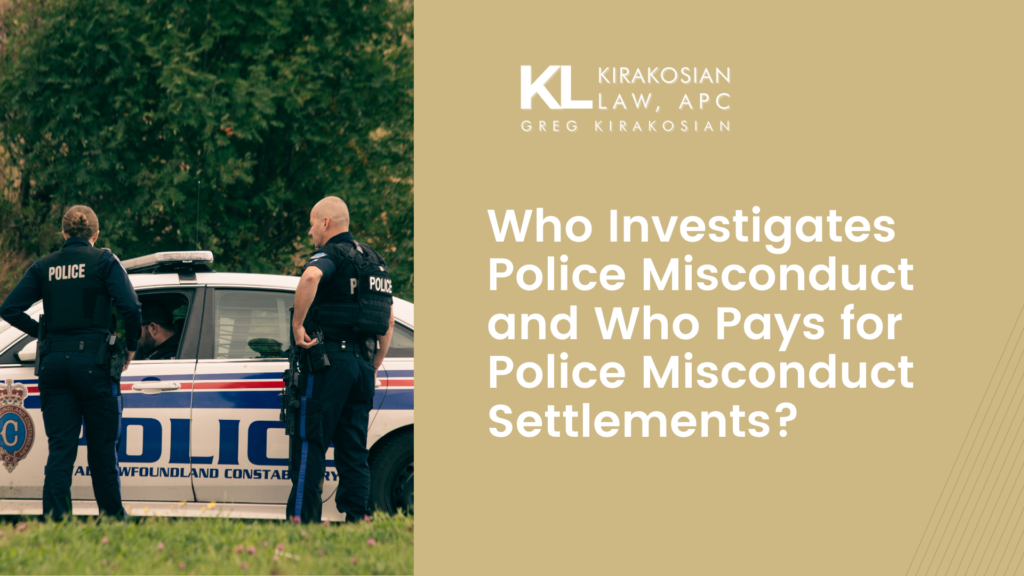
When police misconduct occurs, the public often asks two critical questions: who investigates police misconduct, and who pays for police misconduct settlements when civil rights are violated? These questions go to the heart of accountability and transparency especially in communities that have experienced abuse of power or excessive force.
Understanding how misconduct is investigated and how settlements are funded helps victims and families see how civil lawsuits can play a powerful role in demanding justice.


Who Investigates Police Misconduct?
Police misconduct investigations can involve multiple agencies, depending on the severity of the incident and whether civil rights violations are alleged.
Most commonly, investigations begin internally within the police department itself through Internal Affairs units. These departments review officer conduct, examine evidence, and determine whether department policies were violated.
However, internal investigations are not always sufficient, particularly in serious cases involving excessive force, wrongful death, or constitutional violations.
In California, misconduct may also be investigated by:
- Civilian oversight commissions
- District attorneys (in limited criminal cases)
- State attorneys general
- Federal agencies when civil rights violations are alleged
The complexity of these layers is why many victims turn to civil litigation to uncover the full truth.
Internal Affairs vs. Independent Investigations
Internal Affairs investigations are conducted by the same department that employs the officer involved. While they can result in discipline, they often raise concerns about transparency and bias.
Independent investigations provide a more neutral review. These may be conducted by civilian review boards, special prosecutors, or federal authorities when misconduct involves violations of constitutional rights.
In Los Angeles, for example, police oversight may involve civilian commissions in addition to internal reviews. Still, these processes do not compensate victims—and discipline alone does not always lead to accountability.
This is where civil rights lawsuits become essential.
How Civil Lawsuits Expose Police Misconduct
Civil lawsuits allow victims of police misconduct to take direct legal action, regardless of whether officers face criminal charges or internal discipline.
Through a civil rights claim, attorneys can:
- Subpoena records and body camera footage
- Depose officers and supervisors under oath
- Expose patterns of misconduct within departments
- Hold cities and agencies financially accountable
Kirakosian Law handles police misconduct and civil rights cases that focus on uncovering misconduct and protecting constitutional rights through the civil court system.
Who Pays for Police Misconduct Settlements?
One of the most common misconceptions is that officers personally pay settlements. In reality, police misconduct settlements are typically paid by the city or government entity, not the individual officer.
In California, settlements are usually funded by:
- City budgets
- County or municipal funds
- Public insurance pools
This means taxpayers often bear the financial cost of misconduct. In Los Angeles and other major cities, settlements can reach millions of dollars annually.
While controversial, this system reinforces why civil lawsuits matter: financial accountability pressures cities to reform policies, improve training, and address systemic issues within law enforcement agencies.
For an overview of how civil rights enforcement works at the federal level, victims can reference the U.S. Department of Justice Civil Rights Division (external authority resource).
Why Civil Rights Lawsuits Matter for Accountability
Civil rights lawsuits are one of the most effective tools for accountability when other systems fall short. They provide victims with a voice, uncover hidden misconduct, and create public records that drive reform.
These cases also protect future communities by forcing departments to address patterns of abuse, inadequate training, or unconstitutional practices.
Families and victims can learn more about how these cases intersect with broader civil rights litigation handled by Kirakosian Law and why early legal guidance is critical.

Take Action If Your Rights Were Violated
If you’re questioning who investigates police misconduct or who pays for police misconduct settlements, you may already sense that accountability is not automatic. Civil rights lawsuits give victims a direct path to justice one that does not depend on internal discipline or criminal prosecution.
Kirakosian Law represents individuals whose constitutional rights have been violated and helps them pursue accountability through the civil court system. Speaking with an experienced civil rights attorney can help you understand your options and protect your rights.