


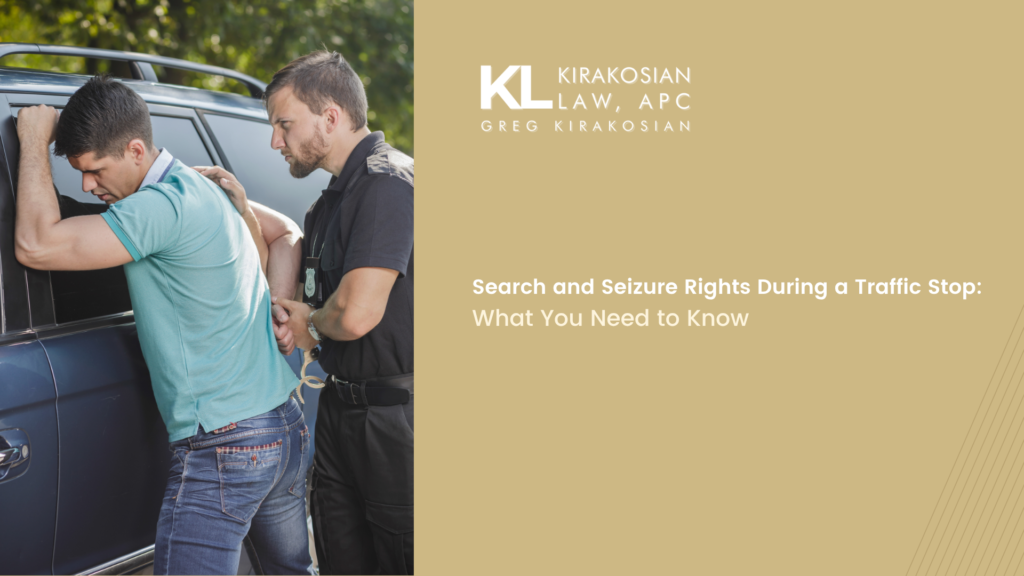
Getting pulled over is stressful even when you have done nothing wrong. Red and blue lights in the rearview mirror can make it hard to remember what you are required to do, and what you are allowed to refuse. In Los Angeles, drivers are protected by the same search and seizure rights that apply everywhere else in California, but those rights are easy to overlook in the moment. Knowing them in advance, before you are ever pulled over, is the best way to protect yourself during a traffic stop. Whether you are driving through downtown Los Angeles or a quiet residential street in the San Fernando Valley, the same constitutional protections travel with you into every stop.
Search and Seizure Protections in California
The Fourth Amendment protects you from unreasonable searches and seizures by the government, and that protection does not pause during a traffic stop. An officer needs a valid reason to stop you in the first place, typically a traffic violation or reasonable suspicion of criminal activity, and a valid legal basis before searching your person or your vehicle. California law provides the same baseline protection, and in some respects California courts have applied it even more carefully than federal courts have. These protections apply regardless of the reason for the stop, whether it was a broken taillight, a rolling stop at a sign, or something more serious, and they do not depend on whether you are ultimately cited or arrested.

Your Rights During a Traffic Stop
During a stop, you have the right to remain silent beyond providing your license, registration, and proof of insurance. You have the right to ask whether you are free to leave, and the right to decline a request to search your vehicle. You do not have to answer questions about where you are going, where you have been, or whether you have anything illegal in the car. Staying calm and polite while asserting these rights is the safest way to protect yourself in the moment. You are also allowed to ask why you were stopped, and officers are generally expected to tell you. If a passenger is present, that passenger has independent rights as well and cannot automatically be searched simply because the driver is being investigated.
When Police Can Search a Vehicle
Police generally need a warrant, your consent, or a recognized exception to search your vehicle. The most common exceptions during a traffic stop include probable cause to believe the car contains evidence of a crime, a search incident to a lawful arrest, or the plain view doctrine, which allows officers to seize anything illegal they can see without searching further. Officers may also search if a trained drug detection dog alerts on the vehicle. You can review Cornell Law’s overview of the Fourth Amendment for more on these search and seizure protections. Absent one of these narrow exceptions, a search of your vehicle without your consent is not lawful. None of these exceptions give officers unlimited authority. Each one is narrow, tied to specific facts, and can be challenged later if the facts do not actually support it.
Consent, Warrants, and Probable Cause
Consent is one of the most common ways officers search a vehicle without a warrant, and you are allowed to say no. If an officer asks whether you mind if they take a look in your car, you can decline clearly and calmly. Learn more about when police can search your car without a warrant in California. Probable cause is different from consent. It means the officer has specific facts, not just a hunch, suggesting your vehicle contains evidence of a crime. Without your consent, a warrant, or probable cause, an officer generally cannot search your vehicle. Many people say yes simply because they feel pressured or do not realize they have a choice. You are allowed to ask questions, take a moment to think, and still say no without being rude or combative.

What to Do If Your Rights Were Violated
If an officer searched your car after you said no, or without any of the legal exceptions above, document everything as soon as it is safe to do so. Write down what was said, note the officer’s name and badge number, and request any dashcam or bodycam footage before it is deleted. Review how to refuse a police search and protect your rights during a stop, and speak with a civil rights attorney about what happened. An unlawful search can affect a criminal case and may also support a separate civil rights claim.
If you believe police searched your vehicle unlawfully during a traffic stop in Los Angeles, Kirakosian Law can review what happened and explain your options. Contact us for a free, confidential case review. There is no fee unless we win.