


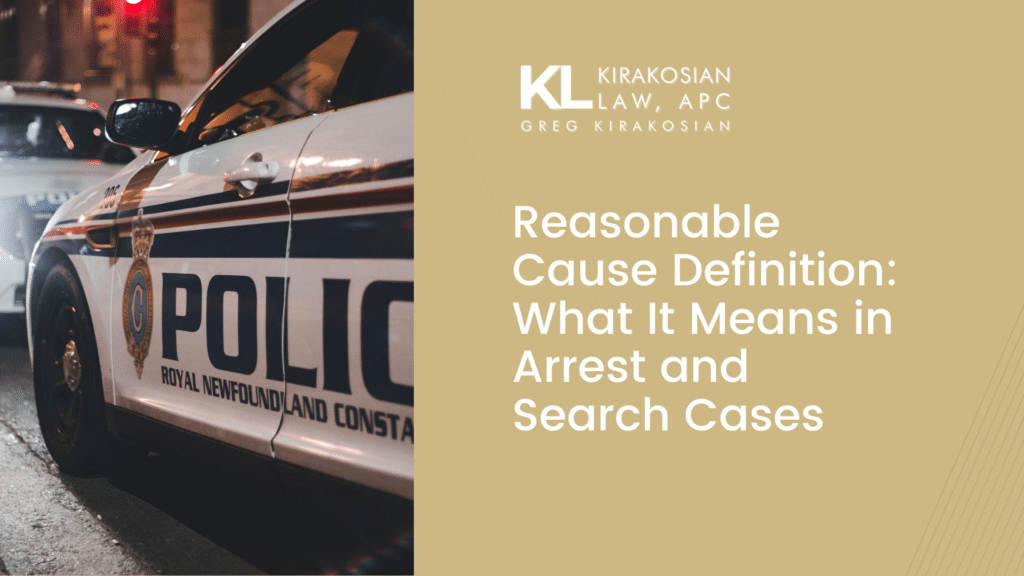
Reasonable cause, also known as probable cause in many legal contexts, is a critical concept that defines when law enforcement officers can lawfully arrest someone, conduct a search, or seize property. In California, reasonable cause refers to the belief, based on clear facts or evidence, that a person has committed, is committing, or will commit a crime. It is not based on intuition or suspicion but on objective, factual circumstances that justify police action. Understanding this definition is essential for protecting your rights, as many unlawful arrests and searches occur when reasonable cause is absent.


When an officer has reasonable cause, it means there are specific, articulable facts supporting their decision.
For example, if an officer observes someone breaking into a car, that direct observation establishes reasonable cause to make an arrest. Similarly, if reliable evidence links a suspect to a crime scene, police may have grounds to conduct a lawful search. However, if an officer stops or searches someone simply because of appearance, location, or vague behavior without evidence, it may be considered an unlawful act and a violation of civil rights.
The line between reasonable cause and unlawful police conduct often determines whether a case is legal or unconstitutional. While probable cause is often used in federal law, California courts recognize “reasonable cause” under state law as the standard for most arrests and searches. Both terms serve the same purpose—to prevent law enforcement from acting arbitrarily or without justification. Courts require that the officer’s actions be supported by concrete information that would lead a reasonable person to believe a crime was involved.

Unlawful arrests or searches occur when law enforcement acts without reasonable cause.
For instance, entering a person’s home without a warrant or sufficient evidence violates the Fourth Amendment, which protects against unreasonable searches and seizures. The absence of reasonable cause in such cases can result in the suppression of evidence, meaning anything found during an unlawful search cannot be used in court. Beyond the legal consequences, these violations can lead to significant emotional and reputational harm for victims.
In Los Angeles, cases involving police misconduct often hinge on whether reasonable cause existed. An arrest made based on a mistaken identity, racial profiling, or false assumption can be challenged as unlawful. Similarly, traffic stops that lead to invasive searches without proper justification may constitute a violation of constitutional rights. Victims in these situations have the right to pursue legal remedies, including civil rights claims against the department or individual officers involved.
Lack of reasonable cause can be a powerful foundation for legal action. When law enforcement fails to meet this standard, victims can work with a civil rights attorney to review evidence, examine police reports, and gather witness statements. Legal experts assess whether the officer acted within the bounds of California law or if misconduct occurred. Having skilled representation is essential to uncover inconsistencies, expose procedural errors, and demand accountability.

Who is Kirakosian Law?
Kirakosian Law, our team has extensive experience handling cases involving unlawful arrests and searches. Led by Greg Kirakosian, the firm focuses on protecting civil rights and ensuring that justice is pursued when police actions cross the line. Each case begins with a detailed legal review to determine whether reasonable cause truly existed at the time of arrest or search. If it did not, the firm works aggressively to have evidence dismissed, charges dropped, or damages recovered for the violation.
Understanding reasonable cause empowers individuals to recognize when their rights have been violated. Many people in California are unaware that police must meet this standard before acting. Knowing your rights helps you stay calm, ask the right questions, and protect yourself from misconduct. If you believe you were detained, searched, or arrested without reasonable cause, the first step is to document everything you remember, obtain copies of any reports or citations, and contact an attorney immediately.
The attorneys at Kirakosian Law in Los Angeles can help you evaluate whether your arrest or search was lawful, gather key evidence, and pursue a civil rights claim if necessary. The firm’s goal is to ensure that no one in California suffers injustice at the hands of improper police actions. Everyone deserves protection under the law, and reasonable cause exists precisely to maintain that balance.
For more information about constitutional protections against unlawful searches and arrests, visit the ACLU’s guide to the Fourth Amendment. This resource can help you understand how to assert your rights during interactions with law enforcement.