
Police pulled my client over for a dark license plate, then searched his whole car and found nothing. A traffic stop is not a search warrant. When police can actually search your vehicle without one, and when they cannot, is narrower than most people think.
One of the most common questions I get is some version of this: “they pulled me over for something small, so how were they allowed to search my whole car?” It is a good question, because most people sense something is off, and often they are right. Being pulled over does not hand an officer the keys to your vehicle.
The short answer
Your car is protected by the Fourth Amendment. A warrantless search is unreasonable unless it fits a recognized exception. For vehicles, the main one is the “automobile exception,” and it lets police search without a warrant only when they have probable cause: a fair probability that the car actually contains evidence of a crime. That is a demanding standard. A minor traffic violation, an old record, or a vague feeling about the hour and the neighborhood does not add up to it. Police can also search with your genuine consent, which is its own rule, covered in the next post.
GREG KIRAKOSIAN’S LEGAL EYE VIEW
The question I get more than any other is, “they stopped me for something tiny, how could they search my whole car?” Here is the honest answer in plain terms: usually they cannot. A stop is permission to deal with the stop. Searching your car needs its own, higher reason, probable cause tied to a real crime. A broken light is not a key to your trunk, and if an officer cannot tell you what he expected to find, he is not searching. He is guessing.
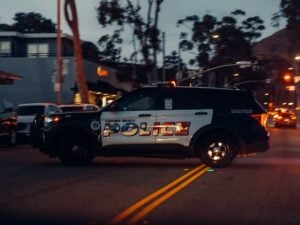
The baseline: your car is not a free-for-all
Start with the default. A warrantless search is “per se unreasonable” unless it falls within a specific exception (Katz, 389 U.S. 347, 357 (1967)). That is true for your home, your person, and your car. The government does not get to search first and justify it later. So the real question in any car-search case is never “was there a reason to stop the driver.” It is “did an exception actually apply to the search.”
The automobile exception, and what “probable cause to search” means
The exception is old, from Carroll v. United States (1925), and rests on two ideas: cars are mobile, and people have a reduced expectation of privacy in a vehicle on public roads. Most people miss the limit: it is not a free pass to search any car an officer stops. It applies only when the officer has probable cause to believe the vehicle contains contraband or evidence of a crime. Probable cause to search means a fair probability, based on specific facts, that evidence will be found in that particular place. Illinois v. Gates, 462 U.S. 213, 238 (1983) (“fair probability that contraband or evidence of a crime will be found in a particular place”). Line it up against a detention: to briefly hold you, an officer needs reasonable suspicion, a lower bar; to search your car, they need probable cause, a higher one. So an officer who does not even have the facts to hold you a little longer is nowhere near the probable cause to search your vehicle. The standards climb, and the facts have to climb with them.
Carroll and Knowles: the line, from both sides
Two cases frame it. In Carroll, Prohibition agents knew particular men as bootleggers, knew their route, and had dealt with them before. When they spotted the same men in the same car on the same road, they had real, specific probable cause, and the search was upheld. 267 U.S. at 156. Contrast Knowles v. Iowa (1998). An officer stopped Knowles for speeding, wrote him a ticket, and searched his whole car under a state rule that let officers search after any citation. A unanimous Supreme Court struck that down. 525 U.S. at 118-19. A ticket is not a search warrant. Put those beside Johnathan’s stop and the answer is obvious. Carroll is what real probable cause looks like. Johnathan’s stop, a burned-out plate light and nothing more, is a Knowles problem, not a Carroll one.
What does not authorize a search of your car
- A traffic ticket. Writing you a citation does not authorize searching your car (Knowles).
- A minor violation, your record, or the late hour. None of these, alone or stacked, is a fair probability the car holds evidence of a crime.
- An arrest, without more. After an arrest, police can search the passenger compartment only in narrow situations (Gant). That is a separate, narrower doctrine.
- An “inventory,” unless it is real. Police can inventory a lawfully impounded car under standard procedures, not as cover for an investigation. In Johnathan’s case the deputy did not even tow the car.
And even when the exception applies, the search is limited to where the thing they have probable cause to find could actually be (Ross, 456 U.S. at 824). Probable cause to look for a stolen bicycle does not authorize opening a pill bottle. An officer who cannot say what crime he thinks the car holds evidence of is not searching. He is fishing.
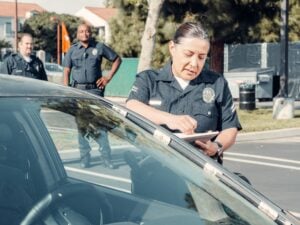
A broken light is not a key to your trunk
Put it together with Johnathan’s stop. The lawful reason for the encounter was a traffic violation. To search the car, the law required probable cause, a fair probability the vehicle held evidence of a crime. A dark plate light does not supply that. Neither does an old conviction or the time on the clock. And when the car was searched, there was nothing in it. That does not by itself make a search legal or illegal, because probable cause is judged by what the officer knew beforehand, but it is a fair real-world check on how thin the basis was. That gap, between “you can be pulled over” and “your car can be searched,” is one the Fourth Amendment takes seriously.
What to do if police want to search your car
- Stay calm, keep your hands visible, and provide your license, registration, and insurance.
- You can decline: “I do not consent to any searches.” It does not make you look guilty and it preserves the issue.
- Do not physically interfere. If they search over your objection, let them, and challenge it in court.
- Ask, “Am I free to go?”
- Write down what happened and, if it is safe and lawful, record it: the stated reason, what they searched, and how long it took.